


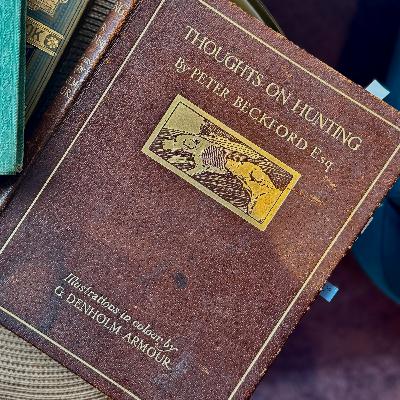
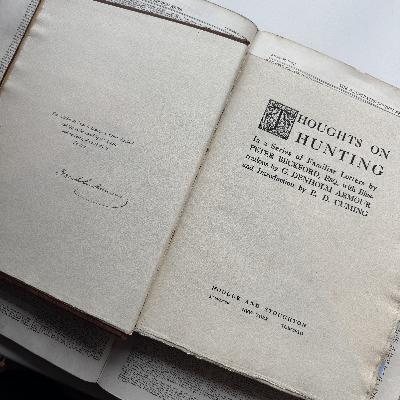
Part 1 | The Book That Started It All: Thoughts on Hunting, Peter Beckford's 1781 Masterpiece and a Chance Encounter in Mayo
Description
This is the book that inspired the entire podcast. In a Westport bookshop, six American tourists watched Avril read aloud from a 1787 hunting manual—amused by passages about dogs "emptying themselves" for kennel cleanliness. One woman turned back in the doorway and said: "You should do a podcast on old books." So here we are.
Peter Beckford's "Thoughts on Hunting" (1787) has remained in continuous print for over 240 years, not because it's a simple hunting manual, but because it's a literary masterpiece. This educated gentleman—fluent in Greek, Latin, Italian, and French—elevated practical fox hunting instruction into elegant prose peppered with classical quotations. He would "bag a fox in Greek, find a hare in Latin, inspect his kennels in Italian, and direct the economy of stables in exquisite French."
Discover the origin story: Beckford published anonymously until a disgruntled clergyman critic prompted him to release an expanded edition with his name attached, directly answering criticisms in footnotes throughout. Learn the rigid class hierarchy of Georgian hunting—Huntsman (leader/strategist), Whipper-in (tactical assistant maintaining pack discipline), and Feeder (essential establishment member). Read the most hilariously terrible character reference ever written: John G starts as "rides pretty well" and deteriorates into "voiceless, dishonest thief, drunk, notorious liar, half a fool, killer of horses."
But the crown jewel is Letter 13—Beckford's fictional hunt that alternates between his prose and William Somerville's poetry, creating a breathless chase from "Hark! they're on the drag" through countryside, over hedges, across plains, until "Ha! they have him. Whoo!" It's Georgian literature at its finest—practical instruction transformed into art.
Features readings from "Thoughts on Hunting" by Peter Beckford (1787), including the complete Letter 13 hunt sequence with William Somerville's "The Chase" (1735) poetry integrated throughout.






 United States
